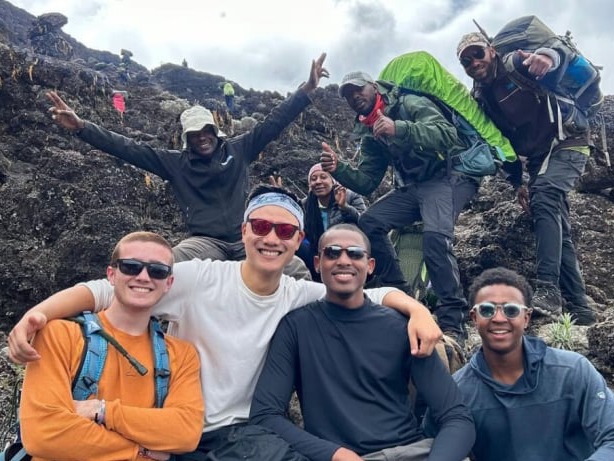
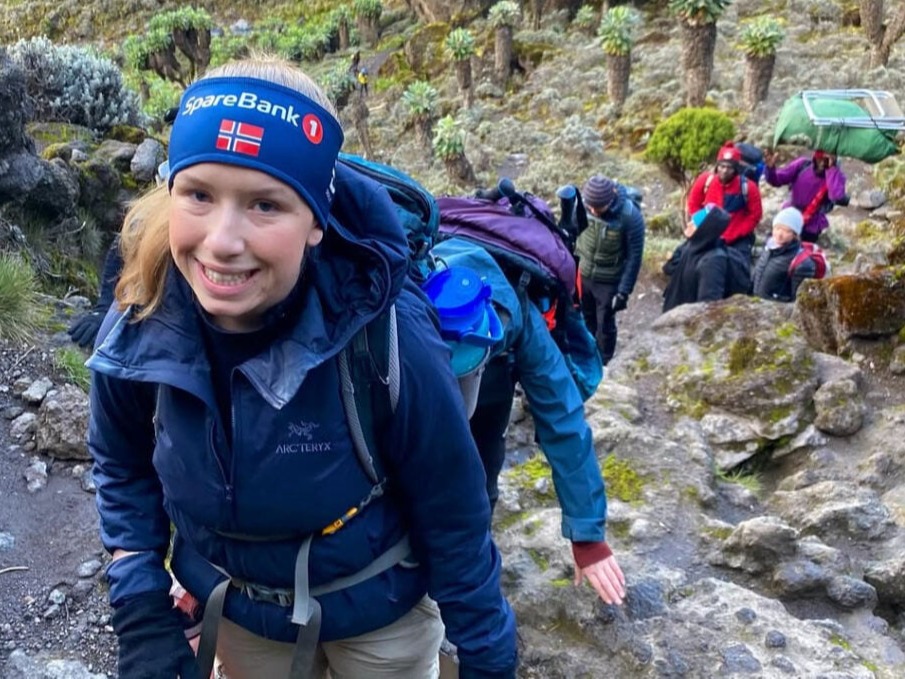
from $320
From $---
From $ ---
From $ ---
From $ ---
From $ 2460
From $ 2460
Embark on a rewarding day hike to Mandara Hut via the Marangu Route, the most popular and scenic trail on Mount Kilimanjaro. Starting from either Moshi or Arusha, this full-day adventure takes you through Kilimanjaro’s lush rainforest, where you can spot wildlife such as colobus monkeys and vibrant birdlife. Upon reaching Mandara Hut at 2,700 meters, you’ll enjoy panoramic views and explore the nearby Maundi Crater before descending. Ideal for those who want a taste of Kilimanjaro’s beauty without committing to the full summit trek.
After breakfast you will meet your guide and transfer to the park entrance where you begin your Kilimanjaro climb. After formalities at the park entrance, you enter the rain forest for a gentle walk through verdant scenery to Mandara Hut. For those who don't want to summit the Mighty Kilimanjaro, a day trip may offer you the perfect alternative; you can walk via the Marangu route up to Mandara Hut, which is 2,700 metres above sea level where there is a small crater. The trip will take around 7 Hrs.
Private transport from Lodge and back,
Tanzania National Park fees.
Professional Mountain Guide
Packed Lunch, mineral water;
International flights (we can arrange)
Tip to the driver guide and hoteliers
Insurance fees
Cost of Visas.
Bank transfer charges & card payments processing fee.
Expenses belong to person nature e.g Drinks not included on the meal plans, personal purchases, Laundry etc.
Tip on Mountain Kilimanjaro is recommended for group sharing as following:
Guide $15 –$20guide/day
Cook $10 – $15/day
Porters $8 – $10/porter/day
Known as the “Coca-Cola” route, the Marangu route is a classic trek on Mount Kilimanjaro. It is the oldest, most well established route. Many favor the Marangu route because it is considered to be the easiest path on the mountain, given its gradual slope. It is also the only route which offers sleeping huts in dormitory style accommodations. The minimum days required for this route is five, although the probability of successfully reaching the top in that time period is quite low. Spending an extra acclimatization day on the mountain is highly recommended when climbing Kilimanjaro using the Marangu route. However, despite its immense popularity, we avoid leading climbs on the Marangu route. The route has the least scenic variety of all the routes because the ascent and descent are done on the same path and it is the most crowded route for that reason. Marangu is favored only during the rainy season, where the hut accommodations are preferred.
Day 1: Marangu Gate (1860m) to Mandara Hut (2700m)
Distance covered: 8.3km / 5.2mi
Approx. time taken: 5 hours
Meals: Breakfast, Lunch & Dinner Included
After breakfast, you will be collected from your lodge in Moshi and taken to the Marangu gate. Once the necessary paper work has been completed, your trek can begin and you will soon be hiking through the dense rainforest. Alongside the impressive vegetation, you will have the chance to catch a glimpse of some primates as you head to the Mandara Hut. After a well- earned rest, your guide can take you to the Maundi Crater where you can enjoy the wonderful view of the Kenyan interior.
Day 2: Mandara Hut (2700m) to Horombo Hut (3700m)
Distance covered: 12.5km / 7.8mi
Approx. Time taken: 9 hours
Meals: Breakfast, Lunch & Dinner Included
The day begins with an early breakfast. Shortly after you have left Mandara Hut, you will reach the timberline and then enter the heath and moor zone. Approximately 4 – 6 hours later, the Horombo Hut will come into sight, standing at an altitude of 3700m. From the hut, you will have fantastic views overlooking Mawenzi, Kibo and the wide plain of the Masai steppe.
Day 3: Horombo Hut (3700m) to Kibo Hut (4700m)
Distance covered: 9.5km / 5.9mi
Approx.Time taken: 7 hours
Meals: Breakfast, Lunch & Dinner Included
From the Shira Plateau, we continue to the east up a ridge, passing the junction towards the peak of Kibo. As we continue, our direction changes to the South East towards the Lava Tower, called the “Shark’s Tooth.” Shortly after the tower, we come to the second junction which brings us up to the Arrow Glacier at an altitude of 16,000ft. We now continue down to the Barranco Hut at an altitude of 13,000ft. Here we rest, enjoy dinner, and overnight. Although you end the day at the same elevation as when you started, this day is very important for acclimatization and will help your body prepare for summit day.
Day 4: Kibo Hut (4700m) to UHURU PEAK (5895m) & down to Horombo Hut (3700m)
Distance covered: 22km / 13.7mi
Approx. Time taken: 12 – 15 hours
Meals: Breakfast, Lunch & Dinner Included
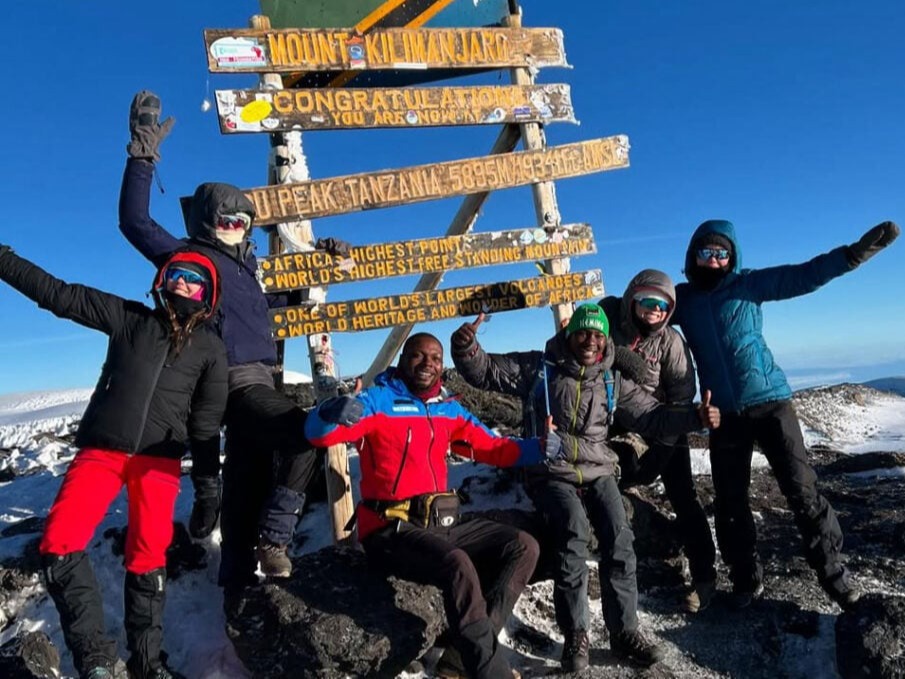
Today is “The Big Day” – the summit stage. You will begin your final ascent around midnight which will be long and strenuous. Passing the Hans Meyer Cave at 5220m, the climb slowly but surely goes upwards. At sunrise, you will reach Gillman’s Point (5681m) – the crater rim of Kilimanjaro – where the sun will slowly start to warm up the land. You will have soon forgotten the cold of the night and after a further hike of 1 – 2 hours, you will reach Uhuru Peak at 5895m. On your return to Kibo Hut, a warm meal awaits you followed by a 1 – 2 hour break before proceeding back down to Horombo Hut.
Day 5: Horombo Hut (3700m) to Marangu Gate (1860m)
Distance covered: 20.8km / 12.9mi
Approx.Time taken: 8 hours
Meals: Breakfast & Lunch Included
The last stage passes through the heath and moor zone to the Mandara Hut (2700m) where a warm lunch is waiting for you. Soon, you will once again pass the tropical rainforest and after a total time of 6 hours trekking, you will be back at the Kilimanjaro National Park Gate (1860m). After saying goodbye to your mountain guides, a short transfer follows to take you back to your hotel in Moshi. Once there, you can take a warm and relaxing shower and celebrate your success in reaching the summit of the Kilimanjaro.
Private transport from Lodge and back,
Tanzania National Park fees.
Professional Mountain Guide
Packed Lunch, mineral water;
International flights (we can arrange)
Tip to the driver guide and hoteliers
Insurance fees
Cost of Visas.
Bank transfer charges & card payments processing fee.
Expenses belong to person nature e.g Drinks not included on the meal plans, personal purchases, Laundry etc.
Tip on Mountain Kilimanjaro is recommended for group sharing as following:
Guide $15 –$20guide/day
Cook $10 – $15/day
Porters $8 – $10/porter/day
Marangu Route 6 Days – Marangu Route is also known as the “Coca Cola” or “tourist” route. It is the easiest and shortest route to the summit. This is also the only route with the comforts of sleeping huts at every campsite with solar lights and comfortable beds. The huts are communal, and the bunks have a sponge mattress and pillow. There are 60 beds at both Mandara and Kibo Huts and 120 beds at Horombo Hut.
Bathrooms and running water are available at the two lower huts. Mens’ and ladies’ latrines are available at the last camp but are very basic. All climbing groups, often from several countries around the world, share meals in dining huts providing a jovial and energetic atmosphere. This route is usually done in 5 days but can be done in 6 days for better acclimatization.
The extra day can be spent resting at Horombo or climbing the small peak of Mawenzi. The main tourist route and by far the most popular route and some claim the easiest route to Uhuru Peak. The 5-day option, which is available on this route, makes it the least expensive route on the mountain.
A 6-day option with an extra day of acclimatization is however also available. This is the only route, which provides comfortable sleeping huts, equipped with beds and mattresses at every campsite. Mineral water, soft drinks, beer and chocolates are also sold at every camp.
Day :1 Marangu Gate (1860m) to Mandara Hut (2700m) Mandara Hut
Distance covered: 8.3km / 5.2mi
Approx. time taken: 5 hours
Meals: Breakfast, Lunch & Dinner Included
After breakfast, you will be collected from your lodge in Moshi and taken to the Marangu gate. Once the necessary paper work has been completed, your trek can begin and you will soon be hiking through the dense rainforest. Alongside the impressive vegetation, you will have the chance to catch a glimpse of some primates as you head to the Mandara Hut. After a well- earned rest, your guide can take you to the Maundi Crater where you can enjoy the wonderful view of the Kenyan interior.
Day: 2 Mandara Hut (2700m) to Horombo Hut (3700m) Horombo Hut
Distance covered: 12.5km / 7.8mi
Approx. Time taken: 9 hours
Meals: Breakfast, Lunch & Dinner Included
The day begins with an early breakfast. Shortly after you have left Mandara Hut, you will reach the timberline and then enter the heath and moor zone. Approximately 4 – 6 hours later, the Horombo Hut will come into sight, standing at an altitude of 3700m. From the hut, you will have fantastic views overlooking Mawenzi, Kibo and the wide plain of the Masai steppe.
Day 3: Acclimatization trek to Zebra Rocks (4020m) then back to Horombo Hut (3700m) Horombo Hut
Distance covered: 5km / 3.1mi
Approx. time taken: 4 hours
Meals: Breakfast, Lunch & Dinner Included
Today serves as an acclimatization day. This should not be underestimated and greatly improves your chance of success in reaching the summit. After a relaxing breakfast, a 4 hour trek follows to the Zebra Rocks (4020m). The distinctive black and white stripes give the rock formation its name. On your return to Horombo Hut, a warm lunch will be waiting for you. You can relax in the afternoon and regain your strength for the hike the following day.
Day 4: Horombo Hut (3700m) to Kibo Hut (4700m)
Approx. time taken: 7 hours
Meals: Breakfast, Lunch & Dinner Included
Today’s stage is long and tough. The well-built trail passes the “Last Water point” which is followed by the so-called “saddle”. This nearly vegetation less plateau joins the main summit Kibo with Mawenzi. Today’s destination is the Kibo Hut that is usually reached in about 5 – 6 hours. Here, you will enjoy an early evening meal followed by an early night, as the night will be short.
Day 5: Kibo Hut (4700m) to Uhuru Peak (5895m) & down to Horombo Hut (3700m) Uhuru Peak
Distance covered: 22km / 13.7mi
Approx. time taken: 12hours – 15hours
Meals: Breakfast, Lunch & Dinner Included
Today is “The Big Day” – the summit stage. You will begin your final ascent around midnight which will be long and strenuous. Passing the Hans Meyer Cave at 5220m, the climb slowly but surely goes upwards. At sunrise, you will reach Gillman’s Point (5681m) – the crater rim of Kilimanjaro – where the sun will slowly start to warm up the land. You will have soon forgotten the cold of the night and after a further hike of 1 – 2 hours, you will reach Uhuru Peak at 5895m. On your return to Kibo Hut, a warm meal awaits you followed by a 1 – 2 hour break before proceeding back down to Horombo Hut.
Day 6: Horombo Hut (3700m) to Marangu Gate (1860m)
Distance covered: 20.8km / 12.9mi
Approx. Time taken: 3 hours
Hotel: Bed & Breakfast
The last stage passes through the heath and moor zone to the Mandara Hut (2700m) where a warm lunch is waiting for you. Soon, you will once again pass the tropical rainforest and after a total time of 6 hours trekking, you will be back at the Kilimanjaro National Park Gate (1860m). After saying goodbye to your mountain guides, a short transfer follows to take you back to your hotel in Moshi. Once there, you can take a warm and relaxing shower and celebrate your success in reaching the summit of the Kilimanjaro.
Private transport from Lodge and back,
Tanzania National Park fees.
Professional Mountain Guide
Packed Lunch, mineral water;
International flights (we can arrange)
Tip to the driver guide and hoteliers
Insurance fees
Cost of Visas.
Bank transfer charges & card payments processing fee.
Expenses belong to person nature e.g Drinks not included on the meal plans, personal purchases, Laundry etc.
Tip on Mountain Kilimanjaro is recommended for group sharing as following:
Guide $15 –$20guide/day
Cook $10 – $15/day
Porters $8 – $10/porter/day
The Kilimanjaro Lemosho route is considered the most scenic trail on Kilimanjaro, granting panoramic vistas on various sides of the mountain. As one of the newer routes, Lemosho is a superb choice for your climb. It is our preferred route due to its ideal balance of low crowds, beautiful scenery and a high summit success rate.. Most of clients climb Kilimanjaro using Lemosho route and their feedback to this route is excellent. We highly recommend Lemosho route to our clients. The climb begins at Londorossi Gate at an altitude of 2360 metres, with an approach far to the west of the mountain. It then circles around Kilimanjaro to the south, passing through majestic rainforest where some of the region’s most unique wildlife can often be seen. The route continues up to the mountain’s third summit at Shira Ridge
Day 1: Lemosho Glades (2385m) to Big Tree Camp (2780m)
You will be picked up at your hotel at around 08:00am and transferred to the Lemosho gate located on the western side of Kilimanjaro. After the registration process you will still start our climb steadily through the forests of the Lemosho glades to reach Big Tree camp where you will be spending the night.
• Distance covered: 7km / 4.3mi
• Approx. time taken: 4 hours
• Meals: Breakfast, Lunch & Dinner Included
Day 2: Big Tree Camp (2780m) to Shira 2 Camp (3900m)
Today you will cover a lot of ground as you trek across a plateau of grassy moorland and heather scattered with volcanic rock formations. We will trek through Shira 1 Camp from where there are often views of Kibo Peak floating on the clouds as we head towards our destination which is Shira 2..
We gain a reasonable amount of altitude as we head towards Shira 1 and parts of the route are fairly steep. As you proceed towards Shira 2 you will get the chance to view the Northern Ice fields from the western side of the mountain with some unusual views of Kibo. Our steady climb across the moorland of the Shira Plateau will help with acclimatization and we enjoy great panoramic views.
• Distance covered: 16.5km / 10.3mi
• Approx. time taken: 9 – 11 hrs
• Meals: Breakfast, Lunch & Dinner Included
Day 3: Shira 2 Camp (3900m) to Barranco Camp (3960m)
Your trek starts with an ascent with far-reaching panoramic views, walking in to the climatic zone of the upland desert and on the lava ridges beneath the glaciers of the Western Breach. You will reach the distinct pinnacle of the Lava Tower (4640 m), our high point for the day and a great place to enjoy your lunch. In the afternoon we make a steep descent to our camp for the night, located in the base of the Great Barranco Valley (3960 m), sheltered by towering cliffs but with extensive views of the plains below.
• Distance covered: 10km / 6.2mi
• Approx. time taken: 7 hrs
• Meals: Breakfast, Lunch & Dinner Included
Day 4: Barranco Camp (3960m) to Barafu Camp (4640m)
After a good night’s rest and breakfast, we set off on our walk to Barafu camp at 4640m. The climb will take us across desolate scree slopes with no vegetation around us at all. It’s a tough steep walk made more difficult by the altitude. On arriving at camp we eat and spend the afternoon resting as we prepare for a long night and day ahead. It is important to keep hydrated and warm. We have an early dinner and then try to get some sleep as we will be getting up at between 11pm and 12pm to start the climb to the summit.
• Distance covered: 3km / 1.9mi
• Approx. time taken: 3 hours
• Meals: Breakfast, Lunch & Dinner Included
Day 5: Barafu Camp (4640m) to UHURU PEAK (5895m) & down to Millennium Camp (3790m)
We start off at around midnight, and walk steeply upwards to the summit glaciers. We will be climbing scree for 4 to 5 hours but gain incredible height over a short distance. The views are spectacular. We should be on the crater rim at Stella Point (5739m) as the first rays of the sun hit us. Spectacular ice cliffs within the crater surround us and the views to jagged Mawenzi peak and beyond are breathtaking. Another hour’s walking takes us to the summit, Uhuru Peak (5895m). We begin our descent by returning to Stella Point and then descending on scree slope and track back to Barafu Camp for breakfast, before finally heading down to Millennium Camp for a long well-earned rest. • Distance covered: 13.4km / 8.3mi • Approx. time taken: 12 – 15 hours • Meals: Breakfast, Lunch & Dinner Included
Day 6: Trek Millennium Camp (3790m) to Mweka Gate (1630m)
A gentle trek takes us down through the rainforest to Mweka Gate, where we complete park formalities and receive certificates, which you can hang up with pride! We are then met by our vehicles and return to the hotel in Moshi, where you can treat yourself to a hot welcome shower. Distance covered: 12.1km / 7.5mi Approx. time taken: 6 hours Meals: Breakfast, Lunch & Dinner Included
• Full briefing before you trip v Park fees & Camping fees
• Camping equipment
• Rescue fees
• Food (3 meals per day)
• Water
• Salaries (guide, cooks, porters)
• Transport to and from the mountain for yourselves and the crew
• Lunch box for the first day
• Crew park fees
• Administration fee
• Certificates of achievement
• Sleeping tent, mess tent , camping chairs and table
• Airport transfer 2 ways Complimentary
• International flights (Can be arranged)
• Visas
• Travel insurance
• Alcoholic and Non-alcoholic beverages
• Additional personal equipment
• Gratuities
• Additional activities for after the climb e.g. safaris, waterfall visit, massage etc
Tip on Mountain Kilimanjaro is recommended for group sharing as following:
Guide $15 –$20guide/day
Cook $10 – $15/day
Porters $8 – $10/porter/day
The Kilimanjaro Lemosho route is considered the most scenic trail on Kilimanjaro, granting panoramic vistas on various sides of the mountain. As one of the newer routes, Lemosho is a superb choice for your climb. It is our preferred route due to its ideal balance of low crowds, beautiful scenery and a high summit success rate.. Most of clients climb Kilimanjaro using Lemosho route and their feedback to this route is excellent. We highly recommend Lemosho route to our clients. The climb begins at Londorossi Gate at an altitude of 2360 metres, with an approach far to the west of the mountain. It then circles around Kilimanjaro to the south, passing through majestic rainforest where some of the region’s most unique wildlife can often be seen. The route continues up to the mountain’s third summit at Shira Ridge
Day 1: Lemosho Glades (2385m) to Big Tree Camp (2780m)
You will be picked up at your hotel at around 08:00am and transferred to the Lemosho gate located on the western side of Kilimanjaro. After the registration process you will still start our climb steadily through the forests of the Lemosho glades to reach Big Tree camp where you will be spending the night.
• Distance covered: 7km / 4.3mi
• Approx. time taken: 4 hours
• Meals: Breakfast, Lunch & Dinner Included
Day 2: Big Tree Camp (2780m) to Shira 2 Camp (3900m)
Today you will cover a lot of ground as you trek across a plateau of grassy moorland and heather scattered with volcanic rock formations. We will trek through Shira 1 Camp from where there are often views of Kibo Peak floating on the clouds as we head towards our destination which is Shira 2..
We gain a reasonable amount of altitude as we head towards Shira 1 and parts of the route are fairly steep. As you proceed towards Shira 2 you will get the chance to view the Northern Ice fields from the western side of the mountain with some unusual views of Kibo. Our steady climb across the moorland of the Shira Plateau will help with acclimatization and we enjoy great panoramic views.
• Distance covered: 16.5km / 10.3mi
• Approx. time taken: 9 – 11 hrs
• Meals: Breakfast, Lunch & Dinner Included
Day 3: Shira 2 Camp (3900m) to Barranco Camp (3960m)
Your trek starts with an ascent with far-reaching panoramic views, walking in to the climatic zone of the upland desert and on the lava ridges beneath the glaciers of the Western Breach. You will reach the distinct pinnacle of the Lava Tower (4640 m), our high point for the day and a great place to enjoy your lunch. In the afternoon we make a steep descent to our camp for the night, located in the base of the Great Barranco Valley (3960 m), sheltered by towering cliffs but with extensive views of the plains below.
• Distance covered: 10km / 6.2mi
• Approx. time taken: 7 hrs
• Meals: Breakfast, Lunch & Dinner Included
Day 4: Barranco Camp (3960m) to Barafu Camp (4640m)
After a good night’s rest and breakfast, we set off on our walk to Barafu camp at 4640m. The climb will take us across desolate scree slopes with no vegetation around us at all. It’s a tough steep walk made more difficult by the altitude. On arriving at camp we eat and spend the afternoon resting as we prepare for a long night and day ahead. It is important to keep hydrated and warm. We have an early dinner and then try to get some sleep as we will be getting up at between 11pm and 12pm to start the climb to the summit.
• Distance covered: 3km / 1.9mi
• Approx. time taken: 3 hours
• Meals: Breakfast, Lunch & Dinner Included
Day 3: Shira 2 Camp (3900m) to Barranco Camp (3960m)
Your trek starts with an ascent with far-reaching panoramic views, walking in to the climatic zone of the upland desert and on the lava ridges beneath the glaciers of the Western Breach. You will reach the distinct pinnacle of the Lava Tower (4640 m), our high point for the day and a great place to enjoy your lunch. In the afternoon we make a steep descent to our camp for the night, located in the base of the Great Barranco Valley (3960 m), sheltered by towering cliffs but with extensive views of the plains below.
• Distance covered: 10km / 6.2mi
• Approx. time taken: 7 hrs
• Meals: Breakfast, Lunch & Dinner Included
Day 4: Barranco Camp (3960m) to Barafu Camp (4640m)
After a good night’s rest and breakfast, we set off on our walk to Barafu camp at 4640m. The climb will take us across desolate scree slopes with no vegetation around us at all. It’s a tough steep walk made more difficult by the altitude. On arriving at camp we eat and spend the afternoon resting as we prepare for a long night and day ahead. It is important to keep hydrated and warm. We have an early dinner and then try to get some sleep as we will be getting up at between 11pm and 12pm to start the climb to the summit.
• Distance covered: 3km / 1.9mi
• Approx. time taken: 3 hours
• Meals: Breakfast, Lunch & Dinner Included
• Full briefing before you trip v Park fees & Camping fees
• Camping equipment
• Rescue fees
• Food (3 meals per day)
• Water
• Salaries (guide, cooks, porters)
• Transport to and from the mountain for yourselves and the crew
• Lunch box for the first day
• Crew park fees
• Administration fee
• Certificates of achievement
• Sleeping tent, mess tent , camping chairs and table
• Airport transfer 2 ways Complimentary
• International flights (Can be arranged)
• Visas
• Travel insurance
• Alcoholic and Non-alcoholic beverages
• Additional personal equipment
• Gratuities
• Additional activities for after the climb e.g. safaris, waterfall visit, massage etc
Tip on Mountain Kilimanjaro is recommended for group sharing as following:
Guide $15 –$20guide/day
Cook $10 – $15/day
Porters $8 – $10/porter/day
The Lemosho Route is widely considered to be the best route on Mount Kilimanjaro. Not too long ago, there were only two main routes used to climb Kilimanjaro – the Marangu (Coca Cola) route and the Machame (Whiskey) route. But as Tanzania’s tourism industry flourished, the Kilimanjaro park authority created more trails to African’s highest peak. Lemosho, a relatively new route, is preferred by reputable operators due to its beauty, remoteness and success rate. In short, it maximizes the chances that a climber will reach the summit, and enjoy the experience overall. The Lemosho route can be done in as little as six days (five nights) on the mountain. However, it is ideally tackled over eight days (seven nights) for a better altitude acclimatization schedule. The trek begins at Londorossi Gate, located in the western base of mountain, within its lush, fertile rainforest. The route heads across the Shira Plateau, before circling along the southern circuit halfway around the mountain, exposing the climber to great views from all angles. The approach to the summit is made from the east, and the descent follows the Mweka trail.
Day 1: Lemosho Glades (2385m) to Big Tree Camp (2780m)
Distance covered: 7km / 4.3mi
Approx. time taken: 4 hours
Meals: Breakfast, Lunch & Dinner Included
You will be picked up at your hotel at around 08:00am and transferred to the Lemosho gate located on the western side of Kilimanjaro. After the registration process you will still start our climb steadily through the forests of the Lemosho glades to reach Big Tree camp where you will be spending the night.
Day 2: Big Tree Camp (2780m) to Shira 1 Camp
Distance covered: 8km/5mi
Approx. time taken: 4-5 hrs
Meals: Breakfast, Lunch & Dinner Included
After breakfast, we leave the glades of the rain forest and continue on an ascending path, crossing the little valley walking along a steep rocky ridge, covered with heather, until the ridge ends. The route now turns west onto a river gorge. Time for rest, dinner, and overnight at the Shira campsite.
Day 3: Shira 1 Camp to Shira 2 Camp
Distance covered: 8km / 6.2mi
Approx. time taken: 4-5 hrs
Meals: Breakfast, Lunch & Dinner Included
After breakfast, a gentle hike across the plateau leads to Shira 2 camp on moorland meadows by a stream. A variety of hikes are available on the Plateau, making this an excellent acclimatization day.
Day 4: Shira 2 Camp (3900m) to Barranco Camp (3960m)
Distance covered: 10km / 6.2mi
Approx. time taken: 7 hrs
Meals: Breakfast, Lunch & Dinner Included
Your trek starts with an ascent with far-reaching panoramic views, walking in to the climatic zone of the upland desert and on the lava ridges beneath the glaciers of the Western Breach. You will reach the distinct pinnacle of the Lava Tower (4640 m), our high point for the day and a great place to enjoy your lunch. In the afternoon we make a steep descent to our camp for the night, located in the base of the Great Barranco Valley (3960 m), sheltered by towering cliffs but with extensive views of the plains below.
DAY 5: Baranco Camp to Karanga Camp
Distance covered: 5.5km / 3.4mi
Approx. time taken: 5 hours
Meals: Breakfast, Lunch & Dinner Included
After breakfast, we leave Barranco and continue on a steep ridge passing the Barranco Wall, to the Karanga Valley campsite. This is a short day meant for acclimatization. Elevation: 13,000ft to 13,100ft Hiking time: 4-5 hours Distance: 3 miles Habitat: Alpine Desert.
Day 6: Karanga Camp (3963) to Barafu Camp (4640m)
Distance covered: 3km / 1.9mi
Approx. time taken: 3 hours
Meals: Breakfast, Lunch & Dinner
Included After a good night’s rest and breakfast, we set off on our walk to Barafu camp at 4640m. The climb will take us across desolate scree slopes with no vegetation around us at all. It’s a tough steep walk made more difficult by the altitude. On arriving at camp we eat and spend the afternoon resting as we prepare for a long night and day ahead. It is important to keep hydrated and warm. We have an early dinner and then try to get some sleep as we will be getting up at between 11pm and 12pm to start the climb to the summit.
DAY 7: Barafu Camp to Uhuru Peak to Mweka Camp
Distance covered: 13.4km / 8.3mi
Approx. time taken: 12 – 15 hours
Meals: Breakfast, Lunch & Dinner Included
We start off at around midnight, and walk steeply upwards to the summit glaciers. We will be climbing screen for 4 to 5 hours but gain incredible height over a short distance. The views are spectacular. We should be on the crater rim at Stella Point (5739m) as the first rays of the sun hit us. Spectacular ice cliffs within the crater surround us and the views to jagged Mawenzi peak and beyond are breathtaking. Another hour’s walking takes us to the summit, Uhuru Peak (5895m). We begin our descent by returning to Stella Point and then descending on scree slope and track back to Barafu Camp for breakfast, before finally heading down to Millennium Camp for a long well-earned rest.
Day 8: Trek Millennium Camp (3790m) to Mweka Gate (1630m)
Distance covered: 12.1km / 7.5mi
Approx. time taken: 6 hours
Meals: Breakfast & Lunch Included
A gentle trek takes us down through the rainforest to Mweka Gate, where we complete park formalities and receive certificates, which you can hang up with pride! We are then met by our vehicles and return to the hotel in Moshi, where you can treat yourself to a hot welcome shower.
Full briefing before you trip Park fees & camping fees
Camping equipment
Rescue fees
Food (3 meals per day)
Water
Salaries (guide, cooks, porters)
Transport to and from the mountain for yourselves and the crew
Lunch box for the first day
Crew park fees
Administration fees
Certificates of achievement
Sleeping tent, mess tent, camping chairs and table
Airport transfer 2 ways complimentary
2 nights accommodation before and after the trek
International Flights
Visas
Travel Insurance
Alcoholic and Non- alcoholic beverages
Additional activities for after the climb e.g safaris, waterfall visit,message etc
Tip on Mountain Kilimanjaro is recommended for group sharing as following:
Guide $15 –$20 guide/day
Cook $10 – $15/day
Porters $8 – $10/porter/day
The Lemosho Route is widely considered to be the best route on Mount Kilimanjaro. Not too long ago, there were only two main routes used to climb Kilimanjaro – the Marangu (Coca Cola) route and the Machame (Whiskey) route. But as Tanzania’s tourism industry flourished, the Kilimanjaro park authority created more trails to African’s highest peak. Lemosho, a relatively new route, is preferred by reputable operators due to its beauty, remoteness and success rate. In short, it maximizes the chances that a climber will reach the summit, and enjoy the experience overall. The Lemosho route can be done in as little as six days (five nights) on the mountain. However, it is ideally tackled over eight days (seven nights) for a better altitude acclimatization schedule. The trek begins at Londorossi Gate, located in the western base of mountain, within its lush, fertile rainforest. The route heads across the Shira Plateau, before circling along the southern circuit halfway around the mountain, exposing the climber to great views from all angles. The approach to the summit is made from the east, and the descent follows the Mweka trail.
Day 1: Lemosho Glades (2385m) to Big Tree Camp (2780m)
Distance covered: 7km / 4.3mi
Approx. time taken: 4 hours
Meals: Breakfast, Lunch & Dinner Included
You will be picked up at your hotel at around 08:00am and transferred to the Lemosho gate located on the western side of Kilimanjaro. After the registration process you will still start our climb steadily through the forests of the Lemosho glades to reach Big Tree camp where you will be spending the night.
Day 2: Big Tree Camp (2780m) to Shira 2 Camp (3900m)
Distance covered: 16.5km / 10.3mi
Approx. time taken: 9 – 11 hrs
Meals: Breakfast, Lunch & Dinner Included
After breakfast, we leave the glades of the rain forest and continue on an ascending path, crossing the little valley walking along a steep rocky ridge, covered with heather, until the ridge ends. The route now turns west onto a river gorge. Time for rest, dinner, and overnight at the Shira campsite.
Day 3: Shira 2 Camp (3900m) to Barranco Camp (3960m)
Distance covered: 10km / 6.2mi
Approx. time taken: 7 hrs
Meals: Breakfast, Lunch & Dinner Included
From the Shira Plateau, we continue to the east up a ridge, passing the junction towards the peak of Kibo. As we continue, our direction changes to the South East towards the Lava Tower, called the “Shark’s Tooth.” Shortly after the tower, we come to the second junction which brings us up to the Arrow Glacier at an altitude of 16,000ft. We now continue down to the Barranco Hut at an altitude of 13,000ft. Here we rest, enjoy dinner, and overnight. Although you end the day at the same elevation as when you started, this day is very important for acclimatization and will help your body prepare for summit day.
Day 4: Shira 2 Camp (3900m) to Barranco Camp (3960m)
Distance covered: 10km / 6.2mi
Approx. time taken: 7 hrs Meals: Breakfast, Lunch & Dinner Included
Your trek starts with an ascent with far-reaching panoramic views, walking in to the climatic zone of the upland desert and on the lava ridges beneath the glaciers of the Western Breach. You will reach the distinct pinnacle of the Lava Tower (4640 m), our high point for the day and a great place to enjoy your lunch. In the afternoon we make a steep descent to our camp for the night, located in the base of the Great Barranco Valley (3960 m), sheltered by towering cliffs but with extensive views of the plains below.
DAY 5: Baranco Camp to Karanga Camp
Distance covered: 5.5km / 3.4mi
Approx. time taken: 5 hours
Meals: Breakfast, Lunch & Dinner Included
After breakfast, we leave Barranco and continue on a steep ridge passing the Barranco Wall, to the Karanga Valley campsite. This is a short day meant for acclimatization. Elevation: 13,000ft to 13,100ft Hiking time: 4-5 hours Distance: 3 miles Habitat: Alpine Desert.
Day 6: Karanga Camp (3963) to Barafu Camp (4640m)
Distance covered: 3km / 1.9mi
Approx. time taken: 3 hours
Meals: Breakfast, Lunch & Dinner Included
After a good night’s rest and breakfast, we set off on our walk to Barafu camp at 4640m. The climb will take us across desolate scree slopes with no vegetation around us at all. It’s a tough steep walk made more difficult by the altitude. On arriving at camp we eat and spend the afternoon resting as we prepare for a long night and day ahead. It is important to keep hydrated and warm. We have an early dinner and then try to get some sleep as we will be getting up at between 11pm and 12pm to start the climb to the summit.
Day 7: Barafu Camp (4640m) to UHURU PEAK (5895m) to Crater Camp (5,790m)
Distance covered: 3km / 1.9mi
Approx. time taken: 5-6 hours & 1-2hours to Crater.
Meals: Breakfast, Lunch & Dinner Included
Wake before dawn to start your summit approach. You’ll reach Uhuru Peak in the early afternoon, when few groups are around. A short descent brings you to Crater Camp, set in soft sands near the famed Furtwangler Glacier. Crater camp is not a route in it’s own right but a challenging extension which in principle can be added to any route. It involves sleeping overnight in the bowl of the crater. An amazing experience enjoyed by only a few of the most adventurous climbers.
Day 8: Crater Camp (5,790m) to Uhuru Peak (5895m) to Millennium Camp (3790m)
Distance covered: 13.4km / 8.3mi
Approx. time taken: 12 – 15 hours
Meals: Breakfast, Lunch & Dinner Included
A gentle trek takes us down through the rainforest to Mweka Gate, where we complete park formalities and receive certificates, which you can hang up with pride! We are then met by our vehicles and return to the hotel in Moshi, where you can treat yourself to a hot welcome shower.
Day 9: Millennium Camp (3790m) to Mweka Gate (1630m)
Distance covered: 12.1km / 7.5mi
Approx. time taken: 6 hours
Meals: Breakfast & Lunch Included
Today you walk down through the rain forest to Mweka Gate, where we complete park formalities and receive certificates, which you can hang up with pride! We are then met by our vehicles and return to your arranged hotel in Moshi.
Full briefing before you trip Park fees & camping fees
Camping equipment
Rescue fees
Food (3 meals per day)
Water
Salaries (guide, cooks, porters)
Transport to and from the mountain for yourselves and the crew
Lunch box for the first day
Crew park fees
Administration fees
Certificates of achievement
Sleeping tent, mess tent, camping chairs and table
Airport transfer 2 ways complimentary
2 nights accommodation before and after the trek
International Flights
Visas
Travel Insurance
Alcoholic and Non- alcoholic beverages
Additional activities for after the climb e.g safaris, waterfall visit,message etc
Tip on Mountain Kilimanjaro is recommended for group sharing as following:
Guide $15 –$20 guide/day
Cook $10 – $15/day
Porters $8 – $10/porter/day
Mount Meru is the second highest mountain in Tanzania, at 4566 metre (14,979 feet). It
is overshadowed by Kilimanjaro, its famous neighbour, and frequently overlooked by
visitors. But Meru is a spectacular mountain; a trek involves beautiful hiking through the
grassland and forest on the mountain’s lower slopers, followed by a dramatic and
exhilarating ridge-walk to the summit.
Day 1: – Momella – Miriakamba Hut
Transfer from your hotel to the National Park Gate at Momella. From here you
pass through lush forest, crossing the Ngare Nanyuki River to reach Miriakamba
Hut (8337ft./2541m).Camp overnight.
Day 2: Saddle Hute – Summit
The path continues to ascend steeply through pleasant forest glades and giant
heather to reach Saddle Hute (11,713ft./3570m). From here it’s possible to reach
the summit of Little Meru (12450ft./3794m) and return to Saddle Hut. Camp
overnight.
Day 3: Descend to Momella Gate
An early start to reach Rhino Point, then on to the summit at 14,981ft./ 4566m.
From here descend all the way down to Momella Gate to meet your vehicle and
transfer back to the base hotel. Dinner and overnight at the hotel.
Full briefing before you trip
Park fees & camping fees
Camping equipment
Rescue fees
Food (3 meals per day)
Water
Salaries (guide, cooks, porters)
Transport to and from the mountain for yourselves and the crew
Lunch box for the first day
Crew park fees
Administration fees
Certificates of archievement
Sleeping tent, mess tent, camping chairs and table
Airport transfer 2 ways complimentary
2 nights’ accommodation before and after the trek
International Flights
Visas
Travel Insurance
Alcoholic and Non- alcoholic beverages
Additional activities for after the climb eg. safaris, waterfall visit, message etc.
Tip on Mountain Kilimanjaro is recommended for group sharing as following:
Guide $15 –$20 guide/day
Cook $10 – $15/day
Porters $8 – $10/porter/day
Machame Route now vies with – and indeed over the last few years has overtaken – the Marangu Route as the most popular trail. Machame is also the regarded by many guides as the most enjoyable, though it is longer and, according to most, more arduous. Despite this, the success rate on the Machame Route is higher than on the Marangu Route, possibly because the Machame is a day longer at six days and five nights (assuming you take the Barafu Route to the summit) which gives trekkers more time to acclimatize. An extra acclimatization day can – and usually is -taken in the Karanga Valley. The Machame Route also gives you the option of taking the Western Breach / Arrow Glacier Route to the summit.
DAY 1: Machame Gate to Machame Camp
Elevation (ft): 5,400ft to 9,400ft
Distance: 11 km
Hiking Time: 5-7 hours
Habitat: Rain Forest
The drive from Moshi to the Mount Kilimanjaro National Park Gate takes about 50 minutes. The journey passes through the village of Machame which is located on the lower slopes of the mountain. We now leave the park gate and walk through the rain forest on a winding trail up a ridge. Lower down, the trail can be muddy and slippery. Gaiters and trekking poles are a good idea here. We continue a short distance until we reach the Machame Camp
.
DAY 2: Machame Camp to Shira Camp
Elevation (ft): 9,400ft to 12,500ft
Distance: 5 km
Hiking Time: 4-6 hours
Habitat: Moorland
After breakfast, we leave the glades of the rain forest and continue on an ascending path, crossing the little valley walking along a steep rocky ridge, covered with heather, until the ridge ends. The route now turns west onto a river gorge. Time for rest, dinner, and overnight at the Shira campsite.
DAY 3: Shira Camp to Lava Tower to Barranco Camp
Elevation (ft): 12,500ft to 13,000ft
Distance: 10 km
Hiking Time: 6-8 hours
Habitat: Semi Desert
From the Shira Plateau, we continue to the east up a ridge, passing the junction towards the peak of Kibo. As we continue, our direction changes to the South East towards the Lava Tower, called the “Shark’s Tooth.” Shortly after the tower, we come to the second junction which brings us up to the Arrow Glacier at an altitude of 16,000ft. We now continue down to the Barranco Hut at an altitude of 13,000ft. Here we rest, enjoy dinner, and overnight. Although you end the day at the same elevation as when you started, this day is very important for acclimatization and will help your body prepare for summit day.
DAY 4: Barranco Camp to Karanga Camp to Barafu Camp
Elevation (ft): 13,000ft to 15,000ft
Distance: 9km
Hiking Time: 8-10 hours
Habitat: Alpine Desert
After breakfast, we leave Barranco and continue on a steep ridge passing the Barranco Wall, to the Karanga Valley campsite. Then, we leave Karanga and hit the junction which connects with the Mweka Trail. We continue up to the Barafu Hut. At this point, you have completed the South Circuit, which offers views of the summit from many different angles. Here we make camp, rest, enjoy dinner, and prepare for the summit day. The two peaks of Mawenzi and Kibo are to be seen from this position.
DAY 5: Barafu Camp to Summit to Mweka Hut
Elevation (ft): 15,300ft to 19,345ft (and down to 10,000ft)
Distance: 5 km ascent / 12 km descent
Hiking Time: 7-8 hours ascent / 4-6 hours descent
Habitat: Arctic
Very early in the morning (midnight to 2am), we continue our way to the summit between the Rebmann and Ratzel glaciers. You head in a northwesterly direction and ascend through heavy scree towards Stella Point on the crater rim. This is the most mentally and physically challenging portion of the trek. At Stella Point (18,600 ft), you will stop for a short rest and will be rewarded with the most magnificent sunrise you are ever likely to see (weather permitting). From Stella Point, you may encounter snow all they way on your 1-hour ascent to the summit. At Uhuru Peak, you have reached the highest point on Mount Kilimanjaro and the continent of Africa. Faster hikers will see the sunrise from the summit. From the summit, we now make our descent continuing straight down to the Mweka Hut camp site, stopping at Barafu for lunch. You will want gaiters and trekking poles for the loose gravel going down. Mweka Camp is situated in the upper forest and mist or rain can be expected in the late afternoon. Later in the evening, we enjoy our last dinner on the mountain and a well-earned sleep.
DAY 6: Mweka Camp to Moshi
Elevation (ft): 10,000ft to 5,400ft
Distance: 10 km
Hiking Time: 3-4 hours
Habitat: Rain Forest
After breakfast, we continue the descent down to the Mweka Park Gate to receive your summit certificates. At lower elevations, it can be wet and muddy. Gaiters and trekking poles will help. Shorts and t- shirts will probably be plenty to wear (keep rain gear and warmer clothing handy). From the gate, you continue another hour to Mweka Village. A vehicle will meet you at Mweka village to drive you back to hotel in Moshi.
Full briefing before you trip
Park fees & camping fees
Camping equipment
Rescue fees
Food (3 meals per day)
Water
Salaries (guide, cooks, porters)
Transport to and from the mountain for yourselves and the crew
Lunch box for the first day
Crew park fees
Administration fees
Certificates of archievement
Sleeping tent, mess tent, camping chairs and table
Airport transfer 2 ways complimentary
2 nights’ accommodation before and after the trek
International Flights
Visas
Travel Insurance
Alcoholic and Non- alcoholic beverages
Additional activities for after the climb eg. safaris, waterfall visit, message etc.
Tip on Mountain Kilimanjaro is recommended for group sharing as following:
Guide $15 –$20 guide/day
Cook $10 – $15/day
Porters $8 – $10/porter/day
Machame Route now vies with – and indeed over the last few years has overtaken – the Marangu Route as the most popular trail. Machame is also the regarded by many guides as the most enjoyable, though it is longer and, according to most, more arduous. Despite this, the success rate on the Machame Route is higher than on the Marangu Route, possibly because the Machame is a day longer at six days and five nights (assuming you take the Barafu Route to the summit) which gives trekkers more time to acclimatize. An extra acclimatization day can – and usually is -taken in the Karanga Valley.
The Machame Route also gives you the option of taking the Western Breach / Arrow Glacier Route to the summit.
DAY 1: Machame Gate to Machame Camp
Elevation (ft): 5,400ft to 9,400ft
Distance: 11 km
Hiking Time: 5-7 hours
Habitat: Rain Forest
The drive from Moshi to the Mount Kilimanjaro National Park Gate takes about 50 minutes. The journey passes through the village of Machame which is located on the lower slopes of the mountain. We now leave the park gate and walk through the rain forest on a winding trail up a ridge. Lower down, the trail can be muddy and slippery. Gaiters and trekking poles are a good idea here. We continue a short distance until we reach the Machame Camp.
DAY 2: Machame Camp to Shira Camp
Elevation (ft): 9,400ft to 12,500ft
Distance: 5 km
Hiking Time: 4-6 hours
Habitat: Moorland
After breakfast, we leave the glades of the rain forest and continue on an ascending path, crossing the little valley walking along a steep rocky ridge, covered with heather, until the ridge ends. The route now turns west onto a river gorge. Time for rest, dinner, and overnight at the Shira campsite.
DAY 3: Shira Camp to Lava Tower to Barranco Camp
Elevation (ft): 12,500ft to 13,000ft
Distance: 10 km
Hiking Time: 6-8 hours
Habitat: Semi Desert
From the Shira Plateau, we continue to the east up a ridge, passing the junction towards the peak of Kibo. As we continue, our direction changes to the South East towards the Lava Tower, called the “Shark’s Tooth.” Shortly after the tower, we come to the second junction which brings us up to the Arrow Glacier at an altitude of 16,000ft. We now continue down to the Barranco Hut at an altitude of 13,000ft. Here we rest, enjoy dinner, and overnight. Although you end the day at the same elevation as when you started, this day is very important for acclimatization and will help your body prepare for summit day.
DAY 4: Barranco Camp to Karanga Camp
Elevation: 13,000ft to 13,100ft
Hiking time: 4-5 hours
Distance: 3 miles
Habitat: Alpine Desert
After breakfast, we leave Barranco and continue on a steep ridge passing the Barranco Wall, to the Karanga Valley campsite. This is a short day meant for acclimatization. Elevation: 13,000ft to 13,100ft Hiking time: 4-5 hours Distance: 3 miles Habitat: Alpine Desert
DAY 5: Karanga Camp to Barafu Camp
Elevation: 13,000ft to 15,300ft
Hiking time: 4-5 hours
Distance: 2.5 miles
Habitat: Alpine Desert
After breakfast, we leave Karanga and hit the junction which connects with the Mweka Trail. We continue up to the Barafu Hut. At this point, you have completed the South Circuit, which offers views of the summit from many different angles. Here we make camp, rest, enjoy dinner, and prepare for the summit day. The two peaks of Mawenzi and Kibo are to be seen from this position.
DAY 6: Elevation: 15,300ft to 19,340ft to 10,000ft
Hiking time: 12 – 15 hours
Distance: 3 miles to Summit; 7 miles descent
Habitat: Arctic
Very early in the morning (midnight to 2am), we continue our way to the summit between the Rebmann and Ratzel glaciers. You head in a northwesterly direction and ascend through heavy scree towards Stella Point on the crater rim. This is the most mentally and physically challenging portion of the trek. At Stella Point (18,600 ft), you will stop for a short rest and will be rewarded with the most magnificent sunrise you are ever likely to see (weather permitting). From Stella Point, you may encounter snow all they way on your 1-hour ascent to the summit. At Uhuru Peak, you have reached the highest point on Mount Kilimanjaro and the continent of Africa. Faster hikers will see the sunrise from the summit. From the summit, we now make our descent continuing straight down to the Mweka Hut camp site, stopping at Barafu for lunch. You will want gaiters and trekking poles for the loose gravel going down. Mweka Camp is situated in the upper forest and mist or rain can be expected in the late afternoon. Later in the evening, we enjoy our last dinner on the mountain and a well-earned sleep.
DAY 7: Mweka Camp to Moshi
Elevation (ft): 10,000ft to 5,400ft
Distance: 10 km
Hiking Time: 3-4 hours
Habitat: Rain Forest
After breakfast, we continue the descent down to the Mweka Park Gate to receive your summit certificates. At lower elevations, it can be wet and muddy. Gaiters and trekking poles will help. Shorts and t- shirts will probably be plenty to wear (keep rain gear and warmer clothing handy). From the gate, you continue another hour to Mweka Village. A vehicle will meet you at Mweka village to drive you back to hotel in Moshi.
Full briefing before you trip
Park fees & camping fees
Camping equipment
Rescue fees
Food (3 meals per day)
Water
Salaries (guide, cooks, porters)
Transport to and from the mountain for yourselves and the crew
Lunch box for the first day
Crew park fees
Administration fees
Certificates of archievement
Sleeping tent, mess tent, camping chairs and table
Airport transfer 2 ways complimentary
2 nights’ accommodation before and after the trek
International Flights
Visas
Travel Insurance
Alcoholic and Non- alcoholic beverages
Additional activities for after the climb eg. safaris, waterfall visit, message etc.
Tip on Mountain Kilimanjaro is recommended for group sharing as following:
Guide $15 –$20 guide/day
Cook $10 – $15/day
Porters $8 – $10/porter/day
The Northern Circuit is the newest and longest route on Mount Kilimanjaro. It begins in the West at the Londorossi Gate and follows the same path as the Lemosho route for the first two days. After crossing the Shira plateau the path veers north near Lava Tower, following the longer Northern Circuit instead of the more popular Southern Circuit via Barranco Valley The route circles around the quieter northern slopes to the east side of the mountain. The Northern Circuit is longer than the other trails on Kilimanjaro, taking a minimum of eight or nine days to complete. The eight day trek skips the additional acclimatization day that is usually spent at Shira Camp 2 and continues straight on to Moir Camp.
Day 1: – Londorossi Gate (2,100 meters)
start point 2,360 meters to Mti Mkubwa Camp (2,820 meters)
Distance: ~5.5km / 3 miles
Trekking time: 3-4 hours
Zone: Rainforest
Meals: Breakfast, Lunch & Dinner Included
The Northern Circuit Route begins at Londorossi Gate (2,100 meters) in the West, the same start point as the Lemosho Route. The drive to Londorossi Gate takes approximately two hours from Moshi and considerably longer from Arusha. Registration with the Kilimanjaro National Park authorities occurs at the gate and then you will be driven further up the mountain to the trailhead starting point. Most tour operators serve lunch here before the short first day trek to Mti Mkubwa Camp (2,820 meters) begins. You may get lucky and spot large wildlife like elephant and buffalo that sometimes emerge from the rainforest onto the path as you trek towards your first camp. Dinner will be served when you reach Mti Mkubwa Camp.
Day 2 – Mti Mkubwa Camp (2,820 meters) to Shira Camp 1 (3,610 meters)
Distance: ~8km / 5 miles
Trekking time: 5-6 hours
Zone: Rainforest / Low Alpine Zone
Meals: Breakfast, Lunch & Dinner Included
On day two you will spend the first hour trekking through the last section of rainforest path before entering the low alpine moorland zone which follows up onto the Shira Plateau. The trek is relatively short and gradual, ending at Shira Camp 1 (3,610 meters). Day 3: 2nd Cave Camp (3480m) to Kikelewa Camp (3630m) Distance covered: 5km / 3.1mi Approx. time taken: 3 – 4 hrs Meals: Breakfast, Lunch & Dinner Included Leaving the pine forest behind us carry on with a steady ascent walking though moorland. There are superb views of the Eastern ice fields on the crater rim of Kibo, the highest of the three volcanoes which form the mountain. We will leave the main trail and strike out across moorland on a smaller path towards the jagged peaks of Mawenzi, the second of Kilimanjaro’s volcanoes. We will set up camp today in the sheltered valley near Kikelewa caves at 3630m.
Day 3– Shira Camp 1 (3,610 meters) to Moir Camp (4,200 meters)
Distance: ~ 14km / 8 miles
Trekking time: 6-8 hours
Zone: Rainforest / Low Alpine Zone/ High alpine zone
Meals: Breakfast, Lunch & Dinner
Included On day three the trek crosses the Shira Plateau from Shira Camp 1 to Shira Camp 2 for lunch. Here nine day trekkers usually spend the night at Shira Camp 2 where they will join trekkers from the Machame Route. But for 8days trekkers will continue with trek heading east which passes through the ‘Garden of the Senecios’ and then enters the high alpine desert zone, then you will join the northern circuit heading down to Moir Camp at 4,200.
Day 4 – Moir Camp (4,200 meters) to Buffalo Camp (4,020 meters)
Distance: ~12km / 7 miles
Trekking time: 5-7 hours
Zone: High alpine zone
Meals: Breakfast, Lunch & Dinner Included
Day five involves a moderately steep climb out of Moir Valley. Trekkers can take a small detour here to climb the summit of Little Lent Hill at 4,375 meters before returning to the Northern Circuit trail. From here the route follows a series of inclines and declines, skirting around the northern slopes of Kibo to Buffalo Camp (4,020 meters).The trek gives great vistas out across the plains that lie north of Kilimanjaro and stretch out to the Kenyan / Tanzanian border. You will arrive at Buffalo Camp just after midday, where you will have lunch and have time to rest after a long day hiking.
Day 5 – Buffalo Camp (4,020 meters) to Rongai Third Cave (3,800 meters)
Distance: ~8km / 5 miles
Trekking time: 5-7 hours
Zone: High alpine zone and low alpine zone
Meals: Breakfast, Lunch & Dinner Included
Day six starts with a climb up the Buffalo ridge and down into Porfu Camp where lunch is usually served. The route then continues east around the northern slopes to the Rongai Third Cave at 3,800 meters. The trek is shorter than the day before and by now you should be feeling well acclimated to the altitude. You will arrive at the Third Cave just around midafternoon.
Day 6 – 3rd Cave (3,800 meters) to School Hut (4,800 meters)
Distance: ~15km / 8 miles
Trekking time: 4-5 hours
Zone: High alpine zone and glacial zone
Meals: Breakfast, Lunch & Dinner Included
Day seven involves a steady incline up and over the Saddle which sits between the peaks of Kibo and Mawenzi Peak. Trekkers then continue walking south-west up to School Hut (4,800 meters). After arriving at School Hut you will be served an early dinner and then you should get some shut-eye as you will be awoken before midnight to start your summit attempt. Remember to prepare all your gear, including warm clothes, insulated water bottles, snacks, headlamp and camera before going to bed.
Day 7 – School Hut (4,800 meters) to Uhuru Peak (5,895 meters)
and then onto Millennium Camp (3,950 meters)
Distance: ~6km / 3.5 miles ascent and 10.5km / 6 mile descent
Trekking time: 6-8 hours ascent and then 4-6 hour descent
Zone: Glacial zone and all preceding zones
Meals: Breakfast, Lunch & Dinner Included
You will be awoken around 11:30 with hot tea and biscuits and will then begin the steep incline up the slopes of Kibo under the cover of darkness. Your first check-point is Hans Meyer Cave where you will take a short break. The climb steepens as you approach Gilman’s Point (5,681 meters), which will be around 5-6 hours after departing School Hut. Take a moment to enjoy the approaching dawn and incredible view out and across to Mawenzi Peak, but remember you still have 2 hours trekking to reach Uhuru Peak so dig deep for the energy. The slope flattens as you head west around the crater rim and you should arrive at the summit at or just after sunrise. Your stay here will be brief so get as many pictures as you can of the incredible views and surrounding glaciers. You will then retrace your steps back around the crater rim to Stella Point (5,739 meters) where you will turn south and head down the heavily screed slopes of Kibo to Barafu Camp (4,680 meters). Most trekkers take a short break here before continuing down to Millennium Camp (3,950 meters) for your final night on the mountain. In total you will be trekking for 14-16 hours on day eight so it is important to pace yourself, remain hydrated and keep your blood sugar levels up. Note: some tour operators return via Gilman’s Point to Horombo Hut using the Marangu Route.
Day 8 – Millennium Camp (3,950 meters) to Mweka Gate (1,640 meters)
Distance: ~10km / 6.5 miles
Trekking time: 3-4 hours
Zone: Rainforest zone
Meals: Breakfast & Lunch included
The final day is a short hike through the dense montane rainforest from Millennium Camp (3,950 meters) to Mweka Gate (1,640 meters). At the gate you will need to sign-out with the authorities, who will also provide you with your official certificate – a green certificate for those who made it to Gilman’s Point and a gold certificate for those who reached Uhuru Peak. It is customary to give your guide and porter tips before being driven back to your hotel in Moshi.
Full briefing before you trip
Park fees & camping fees
Camping equipment
Rescue fees
Food (3 meals per day)
Water
Salaries (guide, cooks, porters)
Transport to and from the mountain for yourselves and the crew
Lunch box for the first day
Crew park fees
Administration fees
Certificates of archievement
Sleeping tent, mess tent, camping chairs and table
Airport transfer 2 ways complimentary
2 nights’ accommodation before and after the trek
International Flights
Visas
Travel Insurance
Alcoholic and Non- alcoholic beverages
Additional activities for after the climb eg. safaris, waterfall visit, message etc.
Tip on Mountain Kilimanjaro is recommended for group sharing as following:
Guide $15 –$20 guide/day
Cook $10 – $15/day
Porters $8 – $10/porter/day
The Umbwe route is a short, steep and direct route. It is considered to be very difficult and is the most challenging way up Mount Kilimanjaro. Due to the quick ascent, Umbwe does not provide the necessary stages for altitude acclimatization. Although the traffic on this route is very low, the chances of success are also low.
The route is offered at a minimum of six days, though seven days is recommended when attempting this route. The Umbwe route should only be attempted by those who are very strong hikers and are confident in their ability to acclimatize. However, overall, the Umbwe route is not recommended and we discourage its usage for our clients.
Day 1: Umbwe Gate
(1,800m/5,905ft) to Cave Bivouac Camp (2,850m/9,350ft)
Elevation Gain:1,050 meters, 3,445 feet
Hiking time: 4 to 6 hours
Meals: Breakfast, Lunch & Dinner Included
At 8am leave Moshi for Umbwe Gate where you will meet our porters, guides, and cooks who will spend the next six days trekking with you to Uhuru Peak, the roof of Africa. After arriving, wait at the gate while we register your climb and the porters and guides make final preparations. Your first day’s destination is Cave Bivouac Camp, approximately 6 hours from the gate. The trail is steep and can be slippery in some places. Hike through the moss-covered trees of Kilimanjaro’s cloud forest. The forest will thin later in the hike and heathers, tall grasses and wildflowers will come into view. Porters and cooks will walk ahead to set up the camp in time for your arrival.
DAY 2: Cave Bivouac
(2,850m/9,350ft) to Barranco Camp (3,950m/12,960ft)
Total Elevation Gain: 1,100 meters, 3,610 feet
Hiking time: 5 to 7 hours
Meals: Breakfast, Lunch & Dinner Included
The first section of the trail continues following the ridge. After leaving the forest, continue through open moorlands until reaching Barranco Camp. Barranco is generally regarded as the most scenic campsite on the Umbwe Trail as it’s surrounded by giant senecios and lobelias. As Barranco is in a valley, the sun rises later than at the other camps.
Day 3: Barranco Camp (3,900 m/12,800 ft)
Elevation Gain: 250 meters, 820 feet
Distance: 7 Kilometers
Hiking time: 3 to 5 hours
Meals: Breakfast, Lunch & Dinner Included
Leave Barranco Camp after breakfast for Karanga Valley. The day begins with a 1.5 hour scramble up the Barranco Wall. This is the hardest part of the day and in some places you may have to use your hands to aid your climb. After reaching the top, hike through fairly level terrain before making a short but steep descent into the green Karanga River Valley.
Day 4: Karanga Valley
(4,200m/13,780ft) to Barafu Camp (4,600m/15,100ft)
Elevation Gain: 400 meters, 1,320 feet
Distance: 6 Kilometers
Hiking time: 3 to 5 hours
Meals: Breakfast, Lunch & Dinner Included
After breakfast, begin the hike to Barafu Camp. On the way to Barafu, view several of Kibo’s glaciers as well as the junction that connects the descent route, Mweka, with the Machame trail. During day four, hike by the Heim, Kersten and Decken Glaciers. Although the trail to Barafu passes through alpine desert with little vegetation, Barafu Camp offers stunning views of Kibo and Mawenzi peaks. Try to sleep after finishing dinner as you will wake before midnight for your summit hike.
Day 5: Barafu Camp (4,600m/15,100ft) to Uhuru Peak
(5,895m/19,340ft) to Mweka Camp (3,100m/10,170ft)
Elevation Gain: 1,295 meters, 4,240 feet
Elevation Loss: 2,795 meters, 9,170 feet
Hiking time: 6 hours to the rim,
1 hour to Uhuru, 3 to 4 hours back to Barafu, 4 hours to Mweka
Meals: Breakfast, Lunch & Dinner Included
Around midnight, begin the final ascent to Uhuru Peak. Hike by the light of your headlamp for the next six hours. The ascent to the crater rim is the most challenging part of the entire trek. The trail is very steep until you reach the crater rim at Stella Point. The hike from Stella Point to Uhuru Peak is a gradual climb and, as far as hikes go, not very difficult. The altitude, however, makes the hike long and tiring. The crater rim hike takes approximately one hour. Upon reaching Uhuru, take photos of your guide and group at the peak before beginning the descent to Mweka Camp. On the way down from Uhuru, enjoy views of the mountain, crater, clouds and glaciers. At Barafu Camp, eat breakfast and take a short break. You still have another three to five hours to go before reaching Mweka Camp.
Day 6: Mweka Camp (3,100m/10,170ft) to Mweka Gate (1,500m/4,920ft)
Elevation Loss: 1,600 meters, 5,250 feet
Hiking time: 4 hours
Meals: Breakfast Included
After breakfast, finish the trek with a hike through the forest to Mweka Gate. The trail may be slippery following rain. Our vehicles will meet you at the lower station of Mweka Gate to take you back to Moshi.
Full briefing before you trip
Park fees & camping fees
Camping equipment
Rescue fees
Food (3 meals per day)
Water
Salaries (guide, cooks, porters)
Transport to and from the mountain for yourselves and the crew
Lunch box for the first day
Crew park fees
Administration fees
Certificates of archievement
Sleeping tent, mess tent, camping chairs and table
Airport transfer 2 ways complimentary
2 nights’ accommodation before and after the trek
International Flights
Visas
Travel Insurance
Alcoholic and Non- alcoholic beverages
Additional activities for after the climb eg. safaris, waterfall visit, message etc.
Tip on Mountain Kilimanjaro is recommended for group sharing as following:
Guide $15 –$20 guide/day
Cook $10 – $15/day
Porters $8 – $10/porter/day
The Umbwe route is a short, steep and direct route. It is considered to be very difficult and is the most challenging way up Mount Kilimanjaro. Due to the quick ascent, Umbwe does not provide the necessary stages for altitude acclimatization. Although the traffic on this route is very low, the chances of success are also low. The route is offered at a minimum of six days, though seven days is recommended when attempting this route. The Umbwe route should only be attempted by those who are very strong hikers and are confident in their ability to acclimatize. However, overall, the Umbwe route is not recommended and we discourage its usage for our clients.
DAY 1: Umbwe Gate
(1,800m/5,905ft) to Cave Bivouac Camp (2,850m/9,350ft)
Elevation Gain:1,050 meters, 3,445 feet
Hiking time: 4 to 6 hours
Meals: Breakfast, Lunch & Dinner Included
At 8am leave Moshi for Umbwe Gate where you will meet our porters, guides, and cooks who will spend the next six days trekking with you to Uhuru Peak, the roof of Africa. After arriving, wait at the gate while we register your climb and the porters and guides make final preparations. Your first day’s destination is Cave Bivouac Camp, approximately 6 hours from the gate. The trail is steep and can be slippery in some places. Hike through the moss-covered trees of Kilimanjaro’s cloud forest. The forest will thin later in the hike and heathers, tall grasses and wildflowers will come into view. Porters and cooks will walk ahead to set up the camp in time for your arrival.
DAY: 2 Mandara Hut
(2700m) to Horombo Hut (3700m) Horombo Hut
Total Elevation Gain: 1,100 meters, 3,610 feet
Hiking time: 5 to 7 hours
Meals: Breakfast, Lunch & Dinner Included
The first section of the trail continues following the ridge. After leaving the forest, continue through open moorlands until reaching Barranco Camp. Barranco is generally regarded as the most scenic campsite on the Umbwe Trail as it’s surrounded by giant senecios and lobelias. As Barranco is in a valley, the sun rises later than at the other camps.
DAY 3: Barranco Camp (3,900 m/12,800 ft)
Meals: Breakfast, Lunch & Dinner Included
Extra Day for Acclimatization. Adding this day will ease your effort, and amplify your acclimatization.
DAY 4: Barranco Camp (3,950m/12,960ft) to Karanga Valley (4,200m/13,780ft)
Elevation Gain: 250 meters, 820 feet
Distance: 7 Kilometers
Hiking time: 3 to 5 hours
Meals: Breakfast, Lunch & Dinner Included
Leave Barranco Camp after breakfast for Karanga Valley. The day begins with a 1.5 hour scramble up the Barranco Wall. This is the hardest part of the day and in some places you may have to use your hands to aid your climb. After reaching the top, hike through fairly level terrain before making a short but steep descent into the green Karanga River Valley.
Day 5: Karanga Valley (4,200m/13,780ft) to Barafu Camp (4,600m/15,100ft)
Elevation Gain: 400 meters, 1,320 feet
Distance: 6 Kilometers
Hiking time: 3 to 5 hours
Meals: Breakfast, Lunch & Dinner Included
After breakfast, begin the hike to Barafu Camp. On the way to Barafu, view several of Kibo’s glaciers as well as the junction that connects the descent route, Mweka, with the Machame trail. During day four, hike by the Heim, Kersten and Decken Glaciers. Although the trail to Barafu passes through alpine desert with little vegetation, Barafu Camp offers stunning views of Kibo and Mawenzi peaks. Try to sleep after finishing dinner as you will wake before midnight for your summit hike.
Day 6: Barafu Camp to Uhuru Peak To Mweka Camp
Elevation Gain: 1,295 meters, 4,240 feet
Elevation Loss: 2,795 meters, 9,170 feet
Hiking time: 6 hours to the rim, 1 hour to Uhuru,
3 to 4 hours back to Barafu, 4 hours to Mweka
Meals: Breakfast, Lunch & Dinner Included
Around midnight, begin the final ascent to Uhuru Peak. Hike by the light of your headlamp for the next six hours. The ascent to the crater rim is the most challenging part of the entire trek. The trail is very steep until you reach the crater rim at Stella Point. The hike from Stella Point to Uhuru Peak is a gradual climb and, as far as hikes go, not very difficult. The altitude, however, makes the hike long and tiring. The crater rim hike takes approximately one hour. Upon reaching Uhuru, take photos of your guide and group at the peak before beginning the descent to Mweka Camp. On the way down from Uhuru, enjoy views of the mountain, crater, clouds and glaciers. At Barafu Camp, eat breakfast and take a short break. You still have another three to five hours to go before reaching Mweka Camp.
Full briefing before you trip
Park fees & camping fees
Camping equipment
Rescue fees
Food (3 meals per day)
Water
Salaries (guide, cooks, porters)
Transport to and from the mountain for yourselves and the crew
Lunch box for the first day
Crew park fees
Administration fees
Certificates of archievement
Sleeping tent, mess tent, camping chairs and table
Airport transfer 2 ways complimentary
2 nights’ accommodation before and after the trek
International Flights
Visas
Travel Insurance
Alcoholic and Non- alcoholic beverages
Additional activities for after the climb eg. safaris, waterfall visit, message etc.
Tip on Mountain Kilimanjaro is recommended for group sharing as following:
Guide $15 –$20 guide/day
Cook $10 – $15/day
Porters $8 – $10/porter/day
The Rongai route is the only route that approaches Kilimanjaro from the north, close to the
Kenyan border. Though gaining popularity amongst climbers, Rongai has low traffic. It is the
preferred route for those looking for an alternative to the crowded Marangu route, for those
who would like a more remote hike, and for those who are climbing during the rainy season
(the north side receives less precipitation). The minimum number of days required for this
route is six days, and seven days are recommended. Although the scenery is not as varied as
the western routes, Rongai makes up for this by passing through true wilderness areas for
days before joining the Marangu route at Kibo camp. This route descends down the Marangu
route. Rongai is a moderately difficult route, and is highly recommended, especially for those
with less backpacking experience.
Day 1: Nalemoru Gate (1990m) to Simba Camp (2625m)
Distance covered: 8km / 5mi
Approx. time taken: 4 – 5 hours
Meals: Breakfast, Lunch & Dinner Included
This morning we will drive to the village of Nale Moru for the starting point of the Rongai route.
The first stage of the trek is through farmland and pine forests. You may have chance to see the
beautiful Colobus monkeys or if you’re lucky enough, elephants or buffalos en route. Our first
camp will be the Simba Camp located at the edge of the moorland zone at 2625m.
Day 2: Simba camp (2626m) – Kikelewa Camp (3679m)
Approx. time taken: 6 – 7 hours
Distance: Approximately 11.8 km
Meals: Breakfast, Lunch & Dinner Included
We hike from Simba camp up towards Kibo till 3 482m for lunch at First Caves, a distance
of 5.8km. After lunch we continue trekking until reaching Kikelewa Camp at about 3679
metres. The views start to open up and you begin to feel you’re on a really big mountain!
Water can be found in a obvious stream below the cave, although you might have to wander
downhill a way to find a pool or two. Enjoy dinner and overnight at Kikelewa camp.
Day 3: Kikelewa Cave (3679m) – Mawenzi Tarn camp (4303m)
Distance covered: 8km / 5mi
Approx. time taken: 4 – 5 hours
Meals: Breakfast, Lunch & Dinner Included
A short but steep climb up grassy slopes offers superb views of this wilderness area. The
vegetation zone ends shortly before you reach your next camp at Mawenzi Tarn spectacularly
situated beneath the towering spires of Mawenzi. Spend the afternoon acclimatizing and
exploring the area.
Day 4: Mawenzi Tarn camp (4303m) – Kibo hut (4730m)
Distance covered: 8km / 5mi
Approx. time taken: 5 – 6 hours
Meals: Breakfast, Lunch & Dinner Included
After breakfast we head west and continue ascending on the east side of Kibo crossing the
saddle between Mawenzi and Kibo taking 4 to 5 hours to reach Kibo Hut. The remainder of
the day is spent resting in preparation for the final ascent, which begins around midnight.
Overnight at Kibo hut.
Day 5 – Kibo hut (4730m) – Uhuru Peak (5895m) – Horombo hut (3705m)
Approx. time taken: 7 to 8 hours to reach Uhuru Peak, 6 to 8 hours to descend to
Horombo
Distance: Approxim 12 – 15 hours
Meals: Breakfast, Lunch & Dinner Included
You will rise around 23h20, and after some tea and biscuits you shuffle off into the night,
and this is where the going really gets tough. The first section of the trail consists of a rocky
path to the Hans Meyer Cave (5150m), also a good resting spot. The path then zigzags up to
Gillman’s point (5 681m), which is located on the crater rim. This section is very steep with a
lot of stone scree, requiring a great physical and mental effort. This is probably the most
demanding section of the entire route. Do the Kili shuffle and move slowly. From Gillmans
Point you will normally encounter snow all the way up to Uhuru peak (5895m), the highest
point in Africa. Total exhilaration and satisfaction – you made it Weather conditions on the
summit will determine how long you will be able to spend, taking photographs, before the 3
hour descent back to Kibo hut. After a short rest at Kibo hot, you gather all your gear you left
behind for the ascent and head down to Horombo hut (3 hours) for your overnight. The return
to Horombo hut will seem surprisingly fast compared to the ascent. The total time spent
walking on this day is around 14 hours, so be prepared for a very tough day. Later in the
evening you enjoy your last dinner (with soft drinks and beer for sale at the camp office) on
the mountain and a well-earned sleep, filled with memories and stirring emotions.
Day 6: Horombo hut (3705m) – Marangu Gate (1860m)
Hiking time: 6 hours Distance:
Approximately 29 km Meals: Breakfast, Lunch
After breakfast you continue your descent (6 hours), passing the Mandara hut, down to the
Marangu gate. It is strongly recommended not to pay your porters any tips until you and all
your gear have reached the gate safely. At Marangu gate you sign your name and details in a
register. This is also where successful climbers receive their summit certificates. Those
climbers who reached Gillman’s Point (5685m) are issued with green certificates and those
who reached Uhuru Peak (5895m), receive gold certificates. You now drive back to Moshi
for a long overdue hot shower, dinner descent bed and celebrations!!
Full briefing before you trip
Park fees & camping fees
Camping equipment
Rescue fees
Food (3 meals per day)
Water
Salaries (guide, cooks, porters)
Transport to and from the mountain for yourselves and the crew
Lunch box for the first day
Crew park fees
Administration fees
Certificates of archievement
Sleeping tent, mess tent, camping chairs and table
Airport transfer 2 ways complimentary
2 nights’ accommodation before and after the trek
International Flights
Visas
Travel Insurance
Alcoholic and Non- alcoholic beverages
Additional activities for after the climb eg. safaris, waterfall visit, message etc.
Tip on Mountain Kilimanjaro is recommended for group sharing as following:
Guide $15 –$20 guide/day
Cook $10 – $15/day
Porters $8 – $10/porter/day
The Rongai route is the only route that approaches Kilimanjaro from the north, close to the
Kenyan border. Though gaining popularity amongst climbers, Rongai has low traffic. It is the
preferred route for those looking for an alternative to the crowded Marangu route, for those
who would like a more remote hike, and for those who are climbing during the rainy season
(the north side receives less precipitation). The minimum number of days required for this
route is six days, and seven days are recommended. Although the scenery is not as varied as
the western routes, Rongai makes up for this by passing through true wilderness areas for
days before joining the Marangu route at Kibo camp. This route descends down the Marangu
route. Rongai is a moderately difficult route, and is highly recommended, especially for those
with less backpacking experience.
Day 1: Nalemoru Gate (1990m) to Simba Camp (2625m)
Distance covered: 8km / 5mi
Approx. time taken: 4 – 5 hours
Meals: Breakfast, Lunch & Dinner Included
This morning we will drive to the village of Nale Moru for the starting point of the Rongai route.
The first stage of the trek is through farmland and pine forests. You may have chance to see the
beautiful Colobus monkeys or if you’re lucky enough, elephants or buffalos en route. Our first
camp will be the Simba Camp located at the edge of the moorland zone at 2625m.
Day 2: Simba Camp (2625m) to 2nd Cave Camp (3480m)
Distance covered: 5km / 3.1mi
Approx. time taken: 3 – 4 hours
Meals: Breakfast, Lunch & Dinner Included
The morning hike is a steady ascent up to the Second Cave Camp located in the moorland
zone with superb views of Kibo and the Eastern ice fields on the crater rim.
Day 3: 2nd Cave Camp (3480m) to Kikelewa Camp (3630m)
Distance covered: 5km / 3.1mi
Approx. time taken: 3 – 4 hrs
Meals: Breakfast, Lunch & Dinner Included
Leaving the pine forest behind us carry on with a steady ascent walking though moorland.
There are superb views of the Eastern ice fields on the crater rim of Kibo, the highest of the
three volcanoes which form the mountain. We will leave the main trail and strike out across
moorland on a smaller path towards the jagged peaks of Mawenzi, the second of
Kilimanjaro’s volcanoes. We will set up camp today in the sheltered valley near Kikelewa
caves at 3630m
Day 4: Kikelewa Camp (3630m) to Mawenzi Tarn Hut (4310m)
Distance covered: 8km / 5mi
Approx. time taken: 4 – 5 hours
Meals: Breakfast, Lunch & Dinner Included
This morning we have a short but steep ascent up grassy slopes which is rewarded by a
superb view of the Kenyan plains to the north. We leave vegetation behind shortly before
reaching our next camp at Mawenzi Tarn Hut directly below the towering cliffs of Mawenzi.
This afternoon you have chance to rest or explore the surrounding area to aid acclimatization.
Day 5: Mawenzi Tarn camp (4303m) – Kibo hut (4730m)
Distance covered: 8km / 5mi
Approx. time taken: 5 – 6 hours
Meals: Breakfast, Lunch & Dinner Included
After breakfast we head west and continue ascending on the east side of Kibo crossing the
saddle between Mawenzi and Kibo taking 4 to 5 hours to reach Kibo Hut. The remainder of
the day is spent resting in preparation for the final ascent, which begins around midnight.
Overnight at Kibo hut.
Day 6: Kibo hut (4730m) – Uhuru Peak (5895m) – Horombo hut (3705m)
Approx. time taken: 7 to 8 hours to reach Uhuru Peak, 6 to 8 hours to descend to
Horombo
Distance: Approxim 12 – 15 hours
Meals: Breakfast, Lunch & Dinner Included
You will rise around 23h20, and after some tea and biscuits you shuffle off into the night,
and this is where the going really gets tough. The first section of the trail consists of a rocky
path to the Hans Meyer Cave (5150m), also a good resting spot. The path then zigzags up to
Gillman’s point (5 681m), which is located on the crater rim. This section is very steep with a
lot of stone scree, requiring a great physical and mental effort. This is probably the most
demanding section of the entire route. Do the Kili shuffle and move slowly. From Gillmans
Point you will normally encounter snow all the way up to Uhuru peak (5895m), the highest
point in Africa. Total exhilaration and satisfaction – you made it Weather conditions on the
summit will determine how long you will be able to spend, taking photographs, before the 3
hour descent back to Kibo hut. After a short rest at Kibo hot, you gather all your gear you left
behind for the ascent and head down to Horombo hut (3 hours) for your overnight. The return
to Horombo hut will seem surprisingly fast compared to the ascent. The total time spent
walking on this day is around 14 hours, so be prepared for a very tough day. Later in the
evening you enjoy your last dinner (with soft drinks and beer for sale at the camp office) on
the mountain and a well-earned sleep, filled with memories and stirring emotions.
Day 7: Horombo hut (3705m) – Marangu Gate (1860m)
Hiking time: 6 hours Distance:
Approximately 29 km Meals: Breakfast, Lunch
After breakfast you continue your descent (6 hours), passing the Mandara hut, down to the
Marangu gate. It is strongly recommended not to pay your porters any tips until you and all
your gear have reached the gate safely. At Marangu gate you sign your name and details in a
register. This is also where successful climbers receive their summit certificates. Those
climbers who reached Gillman’s Point (5685m) are issued with green certificates and those
who reached Uhuru Peak (5895m), receive gold certificates. You now drive back to Moshi
for a long overdue hot shower, dinner descent bed and celebrations!!
Full briefing before you trip
Park fees & camping fees
Camping equipment
Rescue fees
Food (3 meals per day)
Water
Salaries (guide, cooks, porters)
Transport to and from the mountain for yourselves and the crew
Lunch box for the first day
Crew park fees
Administration fees
Certificates of archievement
Sleeping tent, mess tent, camping chairs and table
Airport transfer 2 ways complimentary
2 nights’ accommodation before and after the trek
International Flights
Visas
Travel Insurance
Alcoholic and Non- alcoholic beverages
Additional activities for after the climb eg. safaris, waterfall visit, message etc.
Tip on Mountain Kilimanjaro is recommended for group sharing as following:
Guide $15 –$20 guide/day
Cook $10 – $15/day
Porters $8 – $10/porter/day